
The email pings at 9:12 p.m.—a friendly “We’re excited to have Maya back!” from her teacher—with a PDF of missed fractions worksheets attached. Your kitchen table is already a triage center: pill organizer, appointment reminder, half-finished science poster, and the world’s bravest purple backpack. You’ve become fluent in hospital parking lots and lab requisitions, but school feels like another system with its own secret handshake.
Maya shrugs when you ask about tomorrow. “Everyone learned the thing I missed,” she says, tying and untying the same shoelace. “And I don’t know where to sit anymore.” Her voice is steady; her eyes are not. You remember the class group photo from last month—Maya beaming from a hospital bed, the kids holding a sign that said WE MISS YOU. Your heart does a little twist. Missing is different from returning. Returning means catching up, fitting in, being “the kid who was gone,” and navigating a body that sometimes cooperates and sometimes absolutely does not.
You picture the week ahead: Tuesday’s clinic, Wednesday’s fatigue day, Thursday’s “we’ll see.” You want school to be a bridge, not a burden—friends, routine, dignity. You also want the adults to understand: Maya may need to leave class suddenly. She might not manage stairs today. Smells in the cafeteria can make her nauseous, and so can surprise presentations. She needs a place to land when “fine” turns into “not fine,” without a spotlight or a thousand questions.
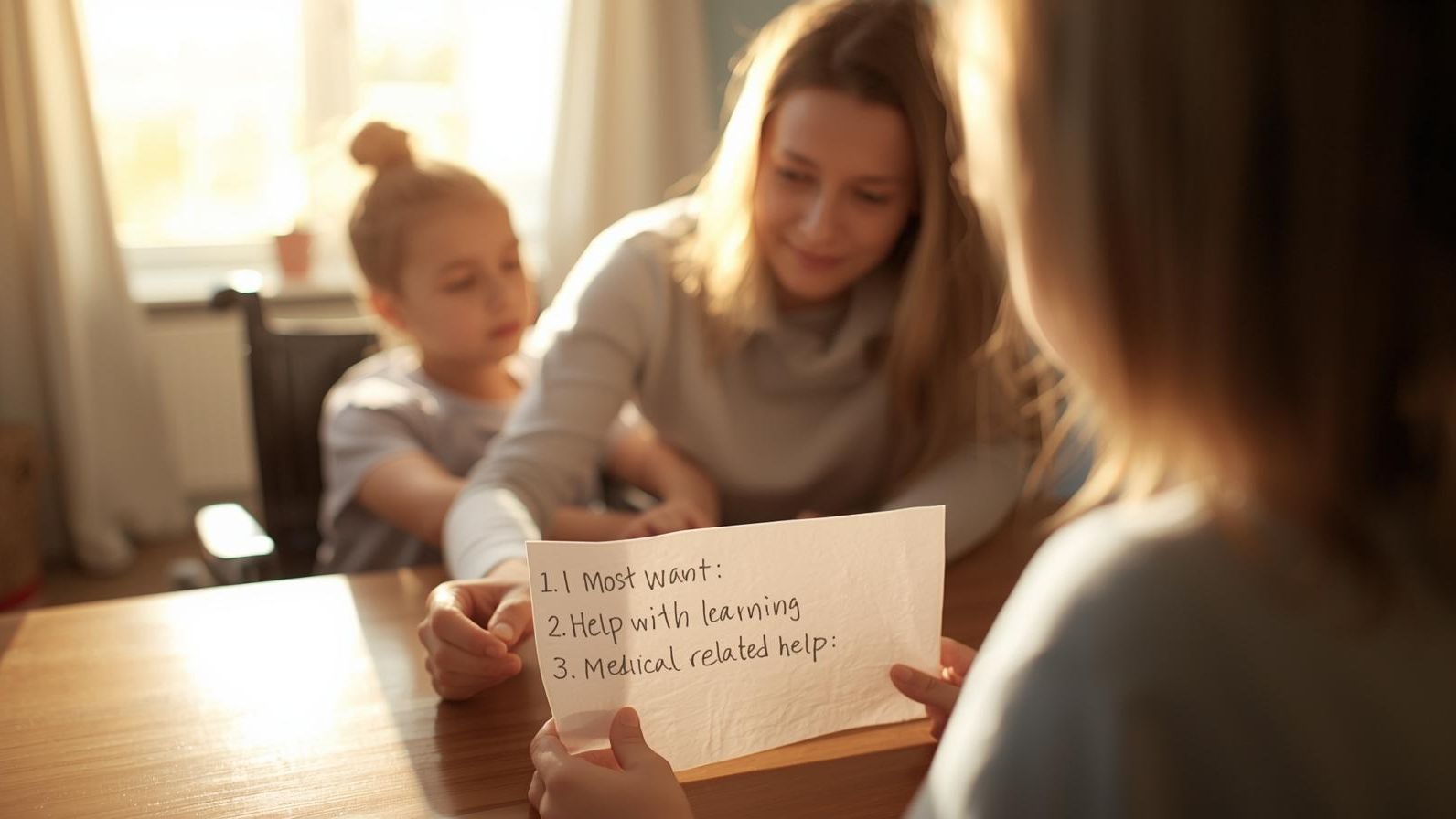
So you try a tiny move. You open a blank note and write three lines:
-
What Maya wants most: to laugh with friends and not be “the sick kid.”
-
What helps learning: a slower ramp for math + notes from a buddy.
-
What helps body/brain: quiet space if dizzy; okay to step out; water always.
You exhale. That’s a start. Then you text a friend: “Remind me I’m not the only mom who needs a degree in project management and gentle courage.” The dots bubble. “You’re not. Coffee after drop-off. You’re doing great.”
You close the laptop. Plan first, panic never. Tomorrow can be kinder—for both of you.
In the next 10 minutes, you’ll get a gentle return-to-school plan that protects your child’s learning, reduces social anxiety, and shows you exactly how to partner with teachers and specialty staff—without turning your kitchen into a second school.
Quick Takeaways
-
A 3-step, 20-minute setup: planning email, one-page “Health & Learning Snapshot,” and a low-key peer re-entry plan.
-
Scripts for teachers and specialty staff (resource teacher, guidance, school nurse).
-
A catch-up map that shrinks overwhelm (not everything needs doing).
-
Evidence-based examples of medical action plans (asthma, diabetes, allergy, seizures) that schools use every day.
What We Now Know (plain-language, evidence-informed)
Good news: Canadian schools have systems to support students with health needs. In Nova Scotia (and similarly across Canada), the Inclusive Education Policy and the Program Planning Process create a team approach (you, teacher(s), resource/support staff) to plan learning and supports—so your child can belong and progress while health is managed. EdNet+1
For many conditions, schools work from individual medical/action plans:
-
Diabetes: an Individual Care Plan covers monitoring, lows/highs, insulin, activity, and meal times. Diabetes at School
-
Asthma: an Asthma Action Plan + access to inhaler/spacer and staff awareness of triggers and emergency steps. Asthma Canada
-
Anaphylaxis (allergies): an Anaphylaxis Emergency Plan is shared with staff; EpiPen access is non-negotiable. Food Allergy Canada
-
Epilepsy: a Seizure Action Plan outlines roles, daily management, and when to call an ambulance. Caring for Kids
For children returning after cancer/critical illness, patient-education groups emphasize coordinated communication, classroom reintegration that reduces stigma, and flexible pacing (reduced workload, extra time, rest space). Canadian Cancer Society+1
Bottom line: you’re not asking for special treatment—you’re using established, evidence-based processes so your child can learn and belong while their health is respected.
Try-This Toolkit (doable in ~20 minutes)
Step 1 — Send the Planning Email (7 minutes)
Copy/paste and tweak to your school context:
Subject: Maya’s return to class—quick plan to support learning & health
Hi [Teacher/Principal/Resource Teacher],
Maya returns [date]. To help her ease back:
• Learning: slower ramp in math (notes from a buddy + one checkpoint by Friday).
• Health: fatigue days; needs water accessible and a quiet step-out spot if dizzy/anxious.
• Medical plan: (attached/at office) [e.g., Asthma/Diabetes/Anaphylaxis/Seizure Action Plan].
Could we meet [15 minutes, in person/virtual] with [guidance/resource/school nurse] to set a catch-up map and a low-key re-entry?
Thank you—our goal is steady learning with minimal disruption.
[Your name] | [Phone]
Step 2 — Fill a One-Page “Health & Learning Snapshot” (8 minutes)
Sections you’ll include (keep it one page):
-
Diagnosis/status in parent language (no private details you don’t want in class files).
-
Energy pattern (e.g., mornings are best; post-treatment days are low).
-
Triggers (heat, odors, noise, stairs).
-
Early warning signs & what helps (quiet corner, water, brief walk).
-
Absence-proofing (how to get notes/assignments).
-
Contacts + medical plan location (office/class).
Step 3 — Plan the Social Re-Entry (5 minutes)
Ask your child what would feel best:
-
Invisible ramp: no big announcement; just a friend buddy and normal routine.
-
Short script for classmates (if appropriate): “I had treatments that made me miss school. It’s not contagious. I might get tired and step out. I’m happy to be back.” (Teacher can read it if your child prefers.)
-
Buddy systems: one academic buddy (notes) + one recess buddy (belonging).
BONUS (optional) — Write the Catch-Up Map
-
Must Do: 1–2 core skills (e.g., last fraction lesson + exit ticket).
-
Nice To Do: optional practice (IXL page, 10-minute review).
-
Not Now: everything else. (Yes, you’re allowed.)
Neurodiversity & Accessibility Corner (3–5 lines)
-
Use visual schedules and predictable routines; reduce noisy, smelly, crowded transitions.
-
Offer two choices at a time (where to sit, which task first).
-
Create a low-stim stopover (library nook/resource room) with a 10-minute pass.
-
Executive-function support: one sticky note with 3 priorities max, and a peer note-buddy.
Real-Talk Q&A (pre-empt the “But what if…?”)
Q1: “My child has missed a lot—should we push extra work at home?”
No cramming. Protect sleep and energy. Ask for a reduced load + extra time, focused on key skills only. Schools expect to differentiate after long absences; use the Program Planning Process language (“adaptations,” “gradual re-entry”). EdNet
Q2: “Teachers are kind, but everyone’s busy. How do we keep momentum?”
Book a 15-minute check-in (every 1–2 weeks) with teacher/resource staff; confirm decisions by email in bullet points. Consistency beats heroics.
Q3: “Peers are curious and my child hates attention.”
Choose the low-key script above or let the teacher handle a one-liner (“Welcome back—if Maya steps out, adults know. Let’s be great friends as usual.”). Normalize; don’t overshare.
Q4: “What about safety during episodes (seizure/asthma/allergy)?”
Ensure the action plan is on file and accessible; train relevant staff; keep medication where your child can access it quickly (as per the plan). Asthma Canada+2Food Allergy Canada+2
Resource Box (3 reputable links, 1-line takeaways)
-
NS: Program Planning Process (Inclusive Education) — team approach to plan learning & supports with families. EdNet
-
Asthma Canada: Asthma at School — action plans, inhaler/spacer access, and staff awareness. Asthma Canada
-
Food Allergy Canada: Anaphylaxis in Schools — up-to-date emergency plan template and educator resources. Food Allergy Canada
(More examples mentioned in-text if your child’s plan is for diabetes or seizures.)
One CTA (only one!)
Download the “Return to School After Illness” Kit (1-page PDF) — planning email template, Health & Learning Snapshot, catch-up map, and a gentle class script. I’ll email it to you.
Evidence Notes Used in This Post
-
Nova Scotia Inclusive Education Policy and Program Planning framework enable team-based supports and adaptations. EdNet+1
-
Diabetes at School (with Diabetes Canada) outlines the Individual Care Plan components for school-day safety. Diabetes at School
-
Asthma Canada recommends sharing an Asthma Action Plan and ensuring medication access. Asthma Canada
-
Food Allergy Canada provides the Anaphylaxis Emergency Plan (updated). Food Allergy Canada
-
CPS/SickKids offer epilepsy school guidance and pediatric oncology reintegration tips, emphasizing clear roles and flexible pacing. Caring for Kids+1