Candy for the Soul: What Dr. Orna’s Couples Therapy Teaches Us About Growth, Grit, and Staying Unstuck
Jun 23, 2026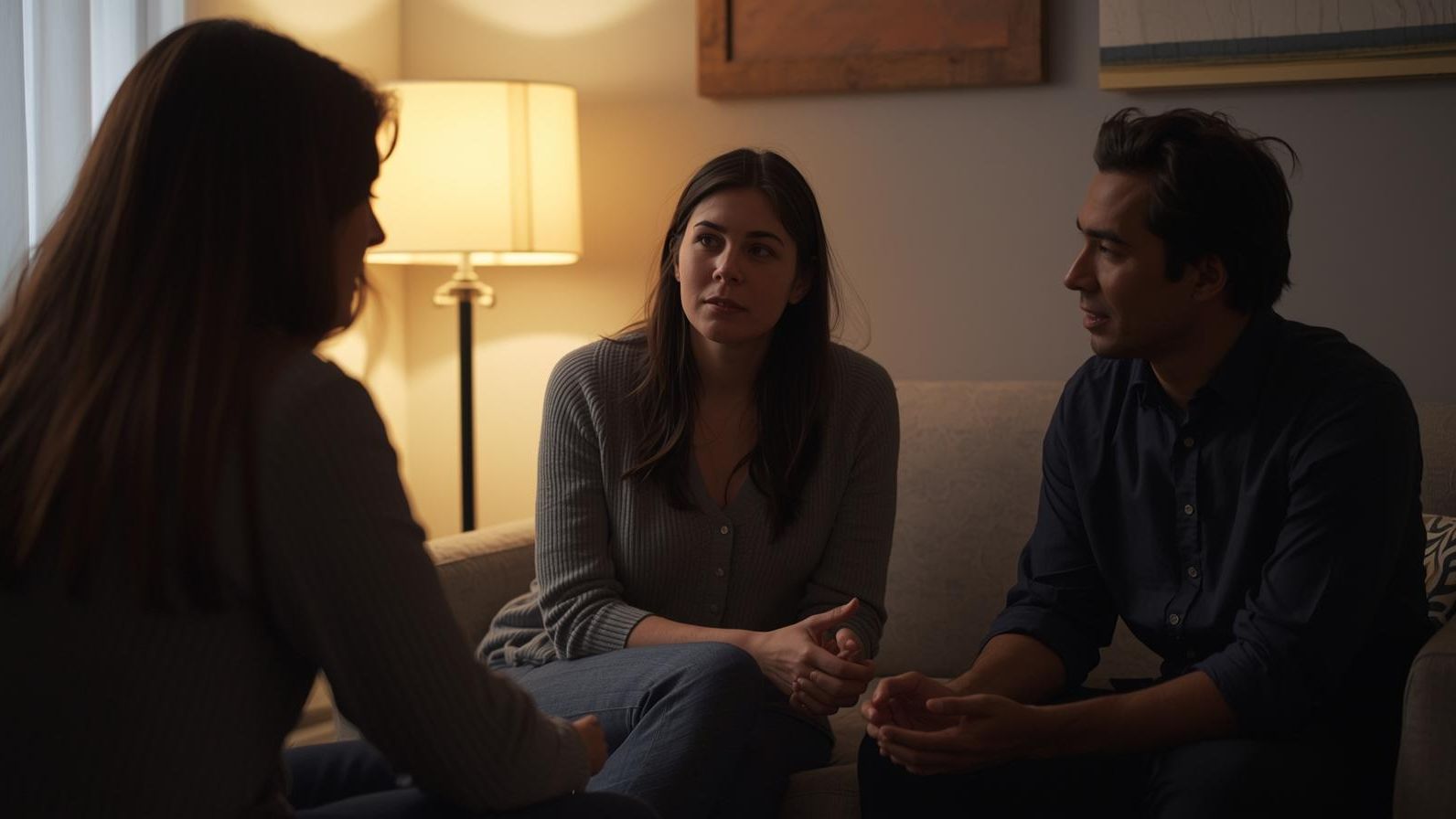
There are certain shows that pop up in your feed and you think, “I’ll just watch five minutes while I fold laundry.” Next thing you know, the laundry is still sitting there in a sad, wrinkled pile, and you’ve binged four episodes, crying, laughing, and occasionally yelling at the screen: “Oh no, don’t say THAT to her!”
For me, that show is Couples Therapy with Dr. Orna Guralnik.
It is, quite frankly, candy for the brain and balm for the soul. Delicious. Addictive. And somehow—nutritious.
Why Watching Couples Therapy Feels So Relatable
If you’ve ever been in a relationship (romantic or otherwise), you watch the couples sitting on Dr. Orna’s couch and think: “Oh wow, that’s familiar.”
The sighs. The silences. The defensive “I’m fine.” The weaponized dishwasher stacking.
And while most of us don’t have TV cameras following us around, we do have the same patterns. The avoidance, the miscommunication, the button-pushing that only someone who knows you deeply can pull off. Watching others lay it all bare is equal parts uncomfortable and affirming.
It’s like being the proverbial fly on the wall—but one who gets to eat popcorn while observing people wrestle with the messiness of love, marriage, identity, and growth.
The Beauty of Reflective Thinking
What draws me most to Dr. Orna isn’t just her accent or her cardigan game—it’s her style.
The way she listens. The way she reflects. The way she makes the moment truly about the client. She validates, supports, and then—without judgment—nudges them just far enough outside their comfort zone to spark growth.
This isn’t passive listening; it’s active reflecting. It’s the art of helping people hear themselves more clearly. Watching her at work makes me want to refine my own counseling and communication skills, to be more like her in my relationships, parenting, coaching, and even in the way I listen to myself.
When Divorce Feels Inevitable
Let’s be honest: some couples walk into that office and within five minutes you’re thinking, “These two should NOT be picking out matching bath towels.”
It’s the kind of session where you’re mentally Googling divorce lawyers on their behalf. The resentment is so thick, you could butter toast with it.
And yet—this is where Dr. Orna works her magic. With patience and relentless empathy, she teases out the backstory, the patterns, the unmet needs, and the deep fears. And suddenly, a sliver of possibility emerges.
Not every couple makes it. But many do. And the ones who stumble their way forward remind us that love is less about perfection and more about persistence.
Growth Is Not Linear (Ask Your Financial Advisor)
The process reminds me of those graphs financial planners show you:
-
There will be growth.
-
There will be setbacks.
-
The line will dip, sometimes dramatically.
-
But if the overall trajectory trends upward, you’re making progress.
Couples therapy is the same.
-
There are breakthroughs: “Oh, so that’s why I do that.”
-
There are relapses: “I said I wouldn’t yell, but then she brought up the recycling bin.”
-
There are plateaus: “We’re just… surviving right now.”
But over time, if the work leads to greater understanding, more kindness, and less “scar tissue communication,” then it’s worth the investment—of time, energy, money, and courage.
Watching Growth in Real Time
What I love most about the show is that you get to see people change. Not instantly, not dramatically, not with fireworks—but slowly, awkwardly, and authentically.
A husband learns to listen instead of fix.
A wife admits she feels unseen, and instead of anger, there’s vulnerability.
A couple finally acknowledges the trauma they both carry and starts walking toward healing—together.
It’s messy. It’s hopeful. It’s real.
And honestly, it’s a reminder that growth—in therapy, in parenting, in career, in self-love—looks the same: two steps forward, one step back, maybe a cartwheel sideways, then eventually forward again.
The Ironic Comfort: We’re All a Little Messy
There’s something oddly comforting about realizing your relationship quirks aren’t unique. Sure, you may think your fight about the dishwasher is particularly special, but then you watch another couple argue about laundry baskets, and you realize: humans are humans.
We all get stuck in loops. We all have triggers. We all, at some point, believe our partner “just doesn’t get it.”
That doesn’t mean your relationship is doomed. It means you’re normal. And normal couples, with support and effort, can grow into healthier, more joyful versions of themselves.
A Growth Mindset Approach to Relationships
Here’s where the Thrive Momma growth mindset comes in.
Instead of believing relationships are fixed (“We’re either compatible or we’re not”), we can choose to believe they’re evolving:
-
Conflicts aren’t failures; they’re opportunities for learning.
-
Vulnerability isn’t weakness; it’s the soil where intimacy grows.
-
Counseling isn’t shameful; it’s one of the bravest investments you can make.
In this light, relationships become less about proving we’re right and more about getting it right—together.
A Culturally Inclusive Take
Of course, how we approach therapy is also shaped by culture. In some cultures, therapy is embraced; in others, it carries stigma. Some families believe problems should be solved “inside the house.” Others openly welcome outside help.
What’s powerful about Couples Therapy is that it shows a wide range of couples: straight, queer, young, old, immigrant, multiracial. Each comes with their own cultural lens, and each is met with the same respect and care.
For our kids, seeing this diversity matters. It normalizes therapy as a tool for everyone—not just certain groups. It reinforces that every culture, every community, every family deserves healthy, thriving relationships.
How We Bring These Lessons Home
You don’t need a camera crew or a New York therapist to start practicing reflective listening in your own home. A few small steps can make a big difference:
-
Pause before reacting. That extra breath is pure gold.
-
Reflect back. Instead of, “You’re wrong,” try, “What I hear you saying is…”
-
Stay curious. Ask, “What made you feel that way?” instead of jumping to assumptions.
-
Invest in help. A counselor, a coach, even a trusted elder can provide perspective.
These aren’t just “relationship hacks.” They’re life skills. Skills that ripple out into how we parent, how we work, how we build community.
Thrive Momma Community Chat
Let’s make this interactive! Share your wisdom below.
💬 Member Chat Options:
-
Have you ever watched Couples Therapy? What stuck with you?
-
What’s one communication trick that helps in your relationships?
-
Do you think therapy is normalized in your culture? Why or why not?
-
What’s the funniest (or most ridiculous) fight you’ve ever had with a partner?
-
If you could learn one skill from Dr. Orna, what would it be?
Closing Thought
At the end of the day, Couples Therapy isn’t about voyeurism—it’s about hope. Hope that two people who feel stuck can grow. Hope that reflection can turn criticism into connection. Hope that the messy graphs of our relationships, full of dips and pitfalls, can still climb upward overall.
Because growth is rarely a straight line. But it is, almost always, worth it.
🌼 Want the Candy For The Soul Toolkit?
Grab your free copy — it is yours to keep, print, and come back to whenever you need it.
[ Get the Free Toolkit ]