Up at 2 a.m.? 4 a.m.? Hi, friend. Pull up a chair.
We’re aiming for “better,” not “perfect sleeper by Thursday.”
Today’s promise: small, safe changes that help everyone rest a little more.
Around week eight, “Kai’s” caregiver (a composite of several of you) started tracking naps on sticky notes. Not an app, just a fridge collage of yellow squares. Nights felt like an escape room: clues everywhere, no solution in sight. After a bleary consult with a public health nurse, they tried three tweaks: move the last feed earlier, darken the room, and write a three-step bedtime flow.
Night one wasn’t magic. Night three brought one longer stretch. By week two, the routine was simple enough to share with grandparents. The house didn’t get quieter; the plan did. That calm is what carries you.
Babies change fast; your plan can be simple and flexible.
Sticky line: Better rhythm, not rigid rules.
What Matters & Why
-
Age-based sleep ranges set realistic expectations.
Why it helps: Knowing what’s typical eases the “what am I doing wrong?” loop.
Ethical link: Caring for Kids (CPS)—Sleep: https://caringforkids.cps.ca/handouts/healthy_sleep_for_your_baby_and_child
Takeaway: Expect ranges, not a schedule carved in stone. -
Safe sleep saves lives.
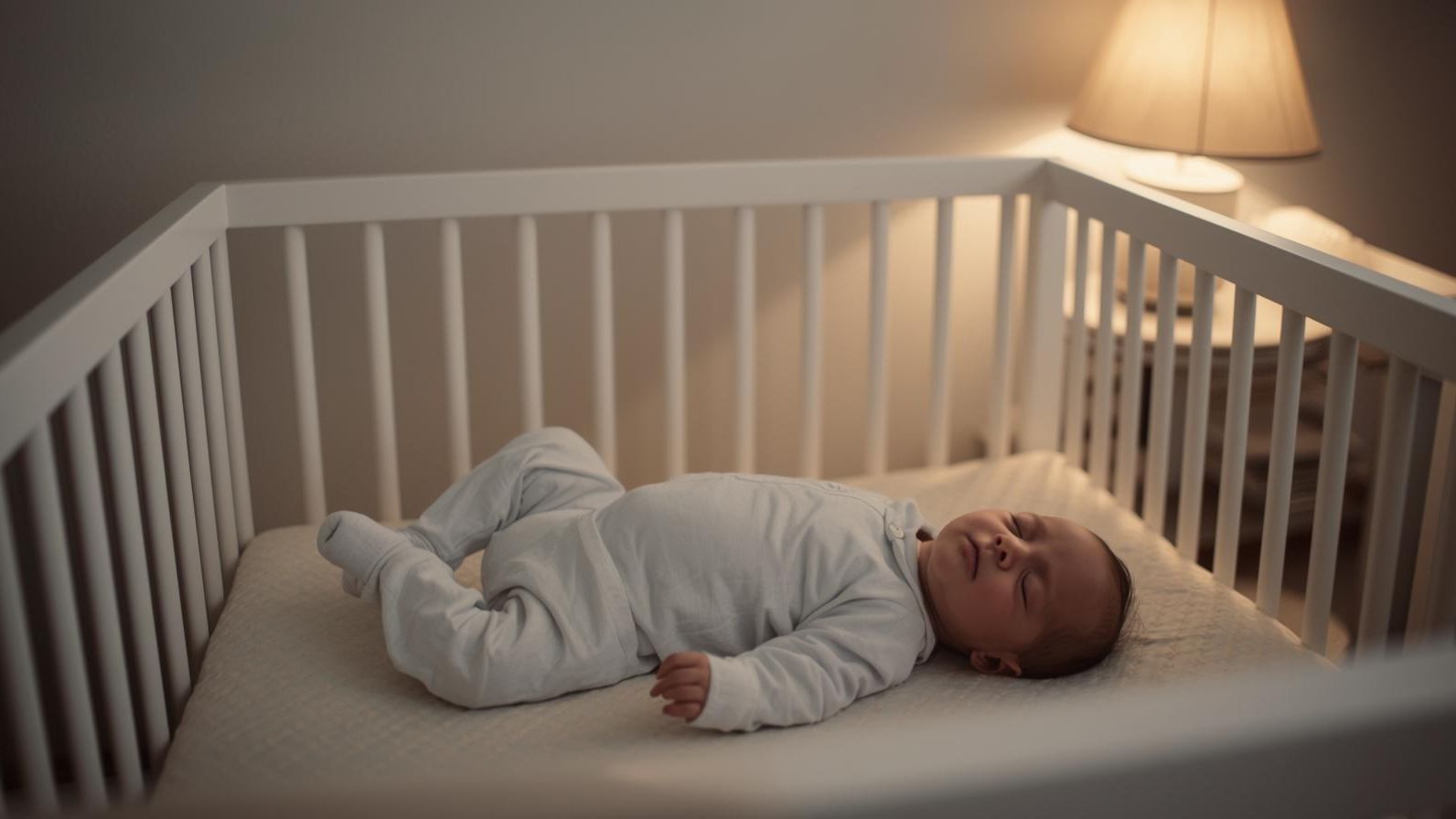
Why it helps: A firm, clutter-free surface and back-to-sleep position reduce risk.
Ethical link: Caring for Kids (CPS)—Safe sleep info: https://caringforkids.cps.ca/
Takeaway: Back to sleep, clear crib, room not too warm. -
Screens and bright light disrupt sleep.
Why it helps: Calmer wind-downs help babies and caregivers fall back asleep.
Ethical link: CPS—Healthy Screen Use: https://caringforkids.cps.ca/handouts/healthy_screen_use_for_children_and_teens
Takeaway: Park phones out of bedrooms at night.
How-To (small wins first; ND-friendly)
-
20-Minute Bedtime Flow (20 min).
Bath → feed → cuddle → lights down. Keep it “same-ish,” not perfect.
ND adaptation: Use a visual card set (bath/pyjamas/feed/crib); keep lighting soft. -
Safe-Sleep Sweep (5 min).
Firm surface, back to sleep, no loose items, moderate room temp.
Caregiving option: Share a one-page crib safety checklist with kin/grandparents. -
Separate Feed and Sleep (this week).
Move the last feed 15–20 minutes earlier so baby learns multiple cues for sleepy time.
Budget option: A simple room-darkening curtain (even a clip-on panel) helps a lot. -
Phone Parking (5 min).
Charge devices outside bedrooms. Your 2 a.m. thumb will thank you.
ND adaptation: Replace scrolling with an audio story and a low-light lamp. -
Visual Routine (10 min to make).
Print icons; post near the change table. Let all caregivers follow the same steps.
Culture option: Add a lullaby in your first language; familiar songs soothe everyone. -
One Change Per Week (ongoing).
Don’t flip the whole system at once. Track changes on a sticky.
ND adaptation: Predictable transitions; give a soft sensory cue (gentle hum, hand on tummy). -
Need a hand? Call 211 (anytime).
Ask for public health nurse lines, new-parent groups, or sleep classes near you.
Real-Life Scripts
-
Kid (cry translation) ↔ You
Baby: “Again?”
You: “Three-minute rock, then crib. Same plan as last night.” -
Co-parent/Caregiver ↔ You
Them: “Try a later bedtime?”
You: “Let’s test 15 minutes earlier for a week and track.” -
Public Health Nurse ↔ You
Them: “What’s happening overnight?”
You: “Wakings x3; we moved the feed earlier and darkened the room.”
Pitfalls → What To Do Instead
-
Comparing babies → Follow your baby’s cues and ranges.
-
Changing five things at once → One tweak per week, then review.
-
Doom-scrolling at 2 a.m. → Audio story + low light + brief stretch.
Micro-Practice (5 minutes this week)
Goal: Start a simple, shareable bedtime flow.
-
Write your three-step flow on a sticky.
-
Do it tonight without chasing perfect.
Done looks like: “We did the same three steps two nights in a row.”
Callback: The escape room gets easier when the clues repeat.
Kind Wrap-Up + Single CTA
You’re not “failing.” You’re learning a tiny human. Simple steps you can repeat beat complicated plans you can’t. For more routines that match your style, take the free quiz: https://www.thrivemommacoaching.com/quiz
Tools & Resources
-
Caring for Kids (CPS)—Sleep: Clear ranges and routines. https://caringforkids.cps.ca/handouts/healthy_sleep_for_your_baby_and_child
-
Caring for Kids (CPS) Home: Evidence-based child health info. https://caringforkids.cps.ca/
-
CPS—Healthy Screen Use: Calmer wind-downs help sleep. https://caringforkids.cps.ca/handouts/healthy_screen_use_for_children_and_teens
-
211 Canada: Free, confidential local supports. https://211.ca
-
PHAC—Movement Guidelines Overview: Sleep/movement basics. https://www.canada.ca/en/public-health/services/publications/healthy-living/24-hour-movement-guidelines-children-youth.html
🌼 Want the Gentle Baby Sleep Basics Toolkit?
Grab your free copy — it is yours to keep, print, and come back to whenever you need it.
[ Get the Free Toolkit ]